Hiển thị các bài đăng có nhãn infrastructure project. Hiển thị tất cả bài đăng

Chủ Nhật, 10 tháng 12, 2017

Infrastructure vital for foreign investment attraction

HCMC – Infrastructure plays a key role in whether foreign investors decide to make an investment in Vietnam or not, heard a conference on infrastructure development in HCMC on December 7.

Speaking at the conference, Kawaue Junichi, consul general of Japan in HCMC, said the first thing investors will look at is infrastructure when it comes to making an investment decision.


According to the consul general, to ensure sustainable infrastructure development, more attention should be paid to social and environmental impacts and economic purposes when implementing infrastructure projects.

Infrastructure projects like seaports, roads, railways and electricity systems should contribute to improving people’s lives and protecting the environment. They should be of high quality as well.

Among the infrastructure projects in Vietnam that have got positive reviews from Japan are Tan Son Nhat International Airport and East-West Highway in HCMC, and Noi Bai International Airport and Nhat Tan Bridge in Hanoi.

Kawaue Junichi said HCMC needs to develop more infrastructure projects of high quality, such as the under-construction Metro Line No.1, to promote foreign investment.

With an aim to assist Vietnam to develop its infrastructure, Japan has plans to fund other large-scale projects like Danang Port and Cai Mep-Thi Vai Port.

To ensure the feasibility and efficiency of an infrastructure project, investors should carefully calculate construction cost and time, assess environmental impact, and evaluate local conditions and demand.

Some experts said at the conference that foreign investors will successfully develop and operate their projects in Vietnam only if infrastructure facilities like power and water supply, and roads are complete and reliable.

Source: The Saigon Times

Chủ Nhật, 3 tháng 12, 2017

ANT Lawyers Participating in GMS Rail Expansion Summit in Hanoi

Railway infrastructure project will be a huge opportunity for Vietnam to connect with neighboring countries, promote trade growth. Huge financial sources will be needed. For government’s perspective, support from private sector will be encouraged through policy, and laws on Public Private Partnership which will be drafted to replace Decree 15/2015/ND-CP promulgated since 2015. From private sector’s perspectives, investment into infrastructure will be opportunities, for investor, bank, EPC main contractor, sub-contractor, consultants to participate.

On Nov. 30 – Dec. 1, 2017, in Hanoi, Vietnam, GMS Rail Expansion Summit http://gmsrail.org has been held.  The countries of the Greater Mekong Subregion (GMS) – Cambodia, the People’s Republic of China (PRC), the Lao People’s Democratic Republic (Lao PDR), Myanmar, Thailand, and Vietnam – have expressed their desire, through the GMS Economic Cooperation Program, for better transport connectivity to improve the environment for trade.


The railways in the GMS countries have developed independently over the course of a century and are today, with the exception of a connection between the PRC and Vietnam, a collection of national railway networks that do not interconnect. Each national railway has developed into a unique system with its own standards and procedures. In view of escalating subregional trade, growing concerns over climate change and, more recently, sharply fluctuating fuel costs, the GMS countries have accelerated their plans for upgrading their national railway networks and for interconnecting these by constructing new railway connections.

It appears that, during the different phases of development of rail infrastructure projects, it is important to identify potential areas for issues to be arisen and therefore put in place a mechanism to minimize risks. The risks will need to be allocated to entity which is best positioned to manage such risks, which has to be shown in the form of contracts, agreement, to clearly determine roles of parties.

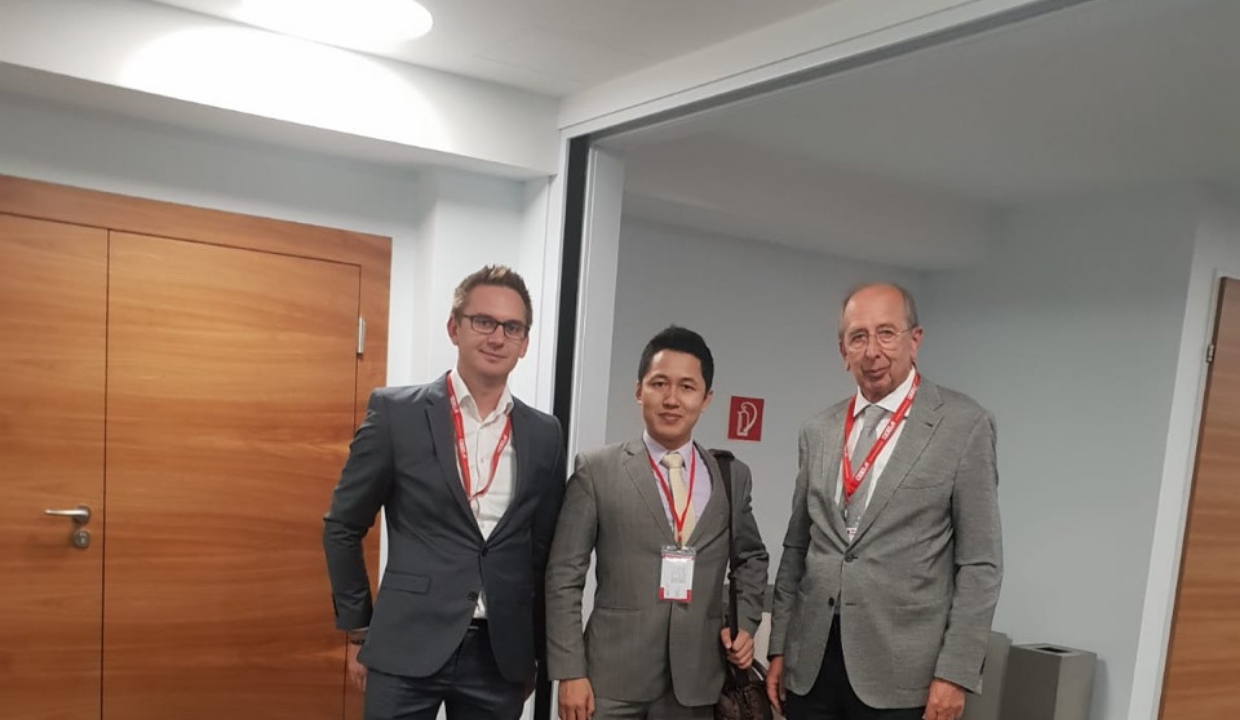
Mr. Tuan Nguyen and Mr. Thomas Giglione of ANT Lawyers, a law firm in Vietnam acted as chairmen of the conference and shared to the audience being government officials, investors, EPC contractors, consultants about potential risks arisen during different phases of executing rail infrastructure project and offer solutions to manage such.It has been highlighted for stakeholders to consider designing a dispute resolution system that resolve potential disputes in relation to the multi billion-dollar project.

Thứ Hai, 16 tháng 10, 2017

HCMC calls for investment in infrastructure

The government of HCMC has rolled out hundreds of projects, including six in Thu Thiem New Urban Area, which will need local and foreign investors to get involved in.

City vice chairman Tran Vinh Tuyen told an investment promotion conference on October 11 that the city would develop a comprehensive traffic system to fuel socio-economic development and ease the pressure of high population growth on infrastructure.

The conference was attended by 500 investors, and representatives of municipal agencies and departments.


There are 64 traffic infrastructure development projects, five urban rehabilitation projects and seven flood control projects requiring private sector capital. Eleven national-level projects will be implemented in the city, including nine for traffic improvement.

The city looks to become one of the biggest economic, financial, commercial and science-technology centers in Southeast Asia. Therefore, in its development plan by 2020 with a vision towards 2025, the city will need private investment in services including finance, banking-insurance, tourism, transport-warehousing, post-telecom, information technology, real estate, consulting, science and technology, healthcare, and education.

The four priority groups of industries are mechanical engineering, electronics-information technology, chemical-rubber-plastic and food-foodstuff processing, and urban infrastructure, environment, healthcare and manpower.

Tuyen said the city would promote domestic and international investments in these sectors so that it can become a modern, friendly and livable place.

According to a construction plan until 2020 and after 2025, the city will be expanded towards four directions – east, south, northwest and southwest, said a representative of the Department of Zoning and Architecture.

The city is working on eight metro lines, three tram lines and a monorail line with a combined length of 220 kilometers. The Saigon Hi-Tech Park in District 9, and new urban areas like Thu Thiem, Saigon South, Thanh Da South, Tay Bac and Hiep Phuoc are underway, offering lots of opportunities for investors.

Vo Van Hoan, office manager of  the HCMC People’s Committee, said the city would need a staggering US$40 billion to fund projects in seven breakthrough programs until 2020. But the city alone cannot afford to raise such a huge amount, so capital from domestic private and foreign firms would have to be sought, he said.

The city also said huge private capital would be needed for upgrading 500 old and deteriorating apartment buildings, and developing new housing blocks.

Source: The Saigon Times

Thứ Sáu, 23 tháng 6, 2017

VND300 trillion needed for infrastructure projects in HCMC


HCMC – The HCMC government will need around VND300 trillion (US$13.2 billion) for its urban infrastructure projects by 2020 but its budget can meet half the amount at best, heard a meeting on June 13.
The city will be able to arrange a mere VND164 trillion for these projects by 2020, said Le Thi Huynh Mai, deputy director of the HCMC Department of Planning and Investment.

City vice chairman Tran Vinh Tuyen said the city’s population had grown to a whopping 13 million, including migrants from other parts of the country, so the city had come under huge pressure to carry out new infrastructure projects, especially in the inner-city districts which account for 12 million residents.
The city is in dire need of new hospitals and schools while the city is working hard to pay for about 199,000 State employees.
The central Government has asked the city to reorganize its administrative agencies and make some of them financially independent to ease the burden for the State budget, he added.
According to a Department of Planning and Investment plan presented on June 13, the city will opt for public-private partnership (PPP) as a key investment format for future infrastructure projects, including 54 projects previously allowed to use State capital, totaling more than VND18.4 trillion.
The city will push for 105 PPP projects worth a total of VND334.6 trillion and encourage the private sector to participate in 98 others capitalized at about VND128.8 trillion, according to the department.
The department said the city will introduce an attractive mechanism for luring private capital into vital projects, especially for social housing, resettlement and infrastructure.

Thứ Năm, 13 tháng 10, 2016

Decree 15/2015/ND-CP on investment in the form of Public - Private partnerships


With the increasing infrastructure demands, while the budget and ODA resources are limited, the call for private investment in infrastructure projects is seen as viable solution. Thus, the Government issued Decree 15/2015/ND-CP on February 14th 2015, provides for regulations on investment in the form of public-private partnerships (PPP) which will partially solve the real problems when implementing PPP projects in Vietnam.
Decree 15 has some new and notably regulations as follows:
1. Decree 15 provides for forms of project contracts, including build – transfer contract (BT contract); build – transfer – lease contract (BTL contract) and build – lease – transfer contract (BLT contract). Thus, investors do not necessarily have to transfer the work to the State. They can choose different solutions depending on the requirements of the investors and fund lenders of the project.
2. Decree 15 clearly stipulates the form of investment and project classification that can apply the form of PPP. Besides the projects on physical infrastructure such as bridge, road, building…, the works on trade, science, technology, meteorological, economic zone, industrial park, tech park, information technology park; information technology application are also included in the list of projects that can apply the form of PPP.
3. Decree 15 also stipulates that the PPP projects will be classified according to national important projects, projects of groups A, B and C. Thanks to this, small projects will be approved more quickly. Accordingly, the project in group C will not have to carry out the procedures for investment registration issuance.
4. Decree 15 regulates that the state capital in the project implementation process will be used primarily to support the construction of auxiliary facilities, the organization of compensation, site clearance and resettlement. However, the decree does not specify the value of land use rights that have been included in the total cost of investment or not.
5. One of the conditions for the selection of projects is that projects must have a total investment of 20 billion VND or more (excluding O&M projects and a number of special projects). In addition, the project has the ability to recover capital from business activities will be prioritized.
6. In terms of the project proposal contents, beside the contents on project information, technical factors …, the contents on expected risk assessment in the course of project implementation and allocation of risk between the competent state agencies and investors should also be mentioned.
7. Decree 15 also provides for the time of project contracting. Accordingly, investors negotiate and sign off the contract project first, and then they will be granted the investment registration certificate. The final step is the signing of the project contract. Thus, the losses, changes or arising before contracting the project will arise legal consequences or not? This issue has not yet been answered.
8. In terms of the project contract contents, Decree 15 lists the necessary contents in a PPP contract and the necessary attached documents. In addition, the Decree also stipulates open so that ministries and provincial People’s Committees are allowed to propose a different form of contract with the form prescribed in Decree 15 to submit the Government for consideration and decision.
9. Decree 15 allows the transfer of rights and obligations under the project contract, or transfers a part or the whole project. This open opportunity to securitize the project, relieving nervous for donors or banks with the project finance issues, especially when investors are not qualified to continue to perform project.
10. Regarding the applicable law, Decree 15 allows the contracting parties may agree to the application of foreign laws to regulate the project contract in which one party is foreign investor or the contracts that are guaranteed by the Government for performance obligation. This is a major change and allowing the international financial consultants to involve deeply in the project.
11. Decree 15 provides for the obligation to guarantee the implementation of project contract, however, this matter will be resolved by the Law on Procurement. The issue of Government guarantee is not clearly defined and it was handed over to Ministry of Finance and Ministry of Justice to study.
12. For the project enterprise, after being granted the investment registration certificate, investors then establish the enterprises to implement projects that consistent with the objectives and scope of activities as agreed in the contract plan. The establishment of the project is implemented in accordance with the business law.
13. Decree 15 clearly stipulates the obligation to monitor the project contract implementation of investors, project business and competent state agencies. The specific allocation of responsibilities is necessary to ensure that the project is monitored to implement carefully. In terms of prices, cost of goods, services and revenue, Decree 15 respects the agreements of the parties in the project contracts and creates conditions for investors to recover capital and profit. This is an important basis for investors to negotiate the price with the supplier or the buyer of the state if there is any disadvantage binding to investors.
14. Decree 15 also specifies the time limit for project settlement. Accordingly, within 6 months from the completion day of the construction, the investor shall make final settlement of investment capital.
15. In terms of the mortgage of assets and the right to operate the project, Decree 15 specifies that investors and project business can mortgage the property, land use rights and the right to operate the project to the lenders under the provisions of the civil law and the law on land, provided that the mortgage term is not exceed the project contract period.
However, the mortgage term may exceed the project contract period if there is an agreement in the project contract. Regarding the form of mortgage agreement, the mortgage agreement of assets and the right to operate the project must be made in writing and signed by the lending party and the contracting parties of the project. Thus, the interests of the lending party to the project will somewhat be secured.
16. On the use of foreign currency in the project, Decree 15 stipulates the principle of ensuring the balance of foreign currency. Accordingly, investors and project enterprises can purchase foreign currency from credit institutions that are licensed to operate foreign exchange in order to meet the needs of current transactions, capital transactions and other transactions or transfer of capital, profits and proceeds from liquidation of foreign investments under the provisions of law on foreign exchange management.
17. On the issue of dispute resolution, Decree 15 classifies disputes into:
(i) Disputes between competent state agencies and investors or project enterprises and disputes between project enterprises and economic organizations participating in the project implementation;
(ii) Disputes between competent state agencies and foreign investors or project enterprises that established by foreign investors;
(iii) Disputes between the project enterprises and foreign organizations, individuals or economic organizations of Vietnam and disputes between investors.
Accordingly, the dispute settlement body corresponding to the above cases is the arbitration organization or the courts of Vietnam in accordance with the law of Vietnam; The arbitration or the Court of Vietnam or the arbitral tribunal are established upon agreement of the parties and are settled according to the provisions of the Investment Law. Disputes that are resolved by arbitration under the provisions of the project contract and related contracts are commercial disputes. The decision of foreign arbitration is recognized and enforced under the provisions of the law on recognition and enforcement of foreign arbitration decisions.
18. Decree 15 stipulates the responsibilities of the concerned ministries and agencies. In particular, the Ministry of Planning and Investment, in addition to other responsibilities, shall have to issue, modify and revoke the certificate of investment registration to projects under their jurisdiction; evaluate the State investment capital participating in the project within its jurisdiction; contribute opinion on issues within their functions and competence required by ministries, agencies and provincial People’s Committees. Ministry of Justice, in addition to other responsibilities, shall have to issue legal opinion to the project contract, guarantee document of the Government and the documents relating to the project signed by the state agencies.
19. As for the project contracts that are signed off before Decree 15 takes effect, they will not have to be renegotiated. Thus, the BT projects that are suspended previously can be redone.


To sum up, the changes in Decree 15 on PPP brought many positive signals to investors and sponsor banks. Many PPP projects are continuing to start, especially in the field of transport, showing that this will be the motivation to promote the development and proper management of infrastructure project.