Thứ Năm, 3 tháng 1, 2019

Legal Regulations in Purchasing Real Estate in for Foreigners in Vietnam


Vietnam has become a better place for foreigners to visiting and staying. Many chose Vietnam as home and they come to Ho Chi Minh City, Ha Noi, Da Nang, Phu Quoc, Nha Trang… to buy real estates for living. Many foreigners consider seeking understanding and with the advisory of their real estate lawyers in Vietnam to purchase the property under their name for best interest protection. There are a number of foreigners seek to cooperate with local Vietnamese under investment agreement to invest in properties. It has always been suggested the buyer or investor to receive legal advice from lawyers and real estate law firms in Vietnam before committing the investment to a certain extent.

According to the Law on housing 2005, foreign organizations and individuals investing in construction of houses for sale and lease in Vietnam have the right to own the houses in Vietnam. However, according to the provisions of the Law on housing 2014, the house owners expand and include foreigners being investors building the houses under investor projects, foreign organizations operating in Vietnam and foreign individuals being allowed to enter Vietnam under the provisions of the Law on Entry, Exit, Transit and Residence of Foreigners in Vietnam; and are not entitled to diplomatic privileges and immunities.

Under the provisions of the Law on housing 2014, foreign organizations and individuals are allowed to own apartments, individual houses (villas and townhouses) in commercial housing projects. The total number of foreign individuals/organizations owned does not exceed 30% of an apartment building or does not exceed 10% or 250 houses of a housing project. Foreign individuals may own houses for up to 50 years and are allowed to extend for no more than 50 years. Foreign organizations own the houses according to the time limit on the Investment Registration Certificate and the extension period. During the time of owning the houses, foreign individuals are allowed to sublease, but foreign organizations are not allowed to sublease the houses.

For foreign individuals/organizations, when buying the houses in Vietnam, it is necessary to have a well drafted sales contract for purchase and sale of the houses because all rights and obligations related to the purchase, sales and ownership of houses are regulated in the contract. Therefore, the buyer should consider the contract carefully, usually with the help of real estate lawyers whom understand Vietnam laws before signing, in order to protect their legitimate rights and interests.

The foreigner when buying and selling the houses, especially off-plan house, need to also pay attention to the regulations on payment schedule in the contract. According to Article 57 of the Law on housing 2015, the payment in the purchase, sales, lease sales of the off-plan real estate in Vietnam is carried out in installments, and the first time must not exceed 30% of the contract value, the next times must be in accordance with the construction schedule, however, not exceeding 50% of the contract value when not handed over when the buyer is an enterprise with foreign investment, not exceeding 70% the value of contract, if the buyer is the foreigner individual the payment is not exceed 50% the value of the contract before handing over the house to the buyer. Until the buyer is issued with a certificate of land use right, ownership of houses and other assets attached to the land, the buyer shall pay no more than 95% the value of contract.

Foreigners in Vietnam need to be assisted to be familiar with the laws relating to the purchase and sale of real estate in order to protect their legitimate rights and interests when participating in transactions in Vietnam. It is important that the foreigners consider using the services of law firm in Vietnam specializing in real estate to advise and help manage the transaction.

Thứ Ba, 1 tháng 1, 2019

Certain provisions of 2012 Labor Code will be amended

The Law on Amendments and Supplements to 37 Laws relating to planning and the XIVth National Assembly’s Resolution No. 72/2018/QH14 prescribes certain contents of the 2012 Labor Code which have been and will be amended or supplemented, including:

- Delete the word “planning” in clause 2 of Article 235 on state management of labor.


- Intend to amend and supplement Chapter XIII on trade unions with a view to giving permission for establishment of employees’ representative organizations which are not subordinate to the Vietnam General Federation of Labour, including the following regulations: 

+ Regulation on the employee’s right to establish and accede to representative organizations which are not subordinate to the Vietnam General Federation of Labour;

+ Principles-based regulation on requirements and processes for establishing, authority to register, operations and dissolution of employees’ representative organizations.

- Intend to supplement Chapter V, Chapter XIII and Chapter XIV relating to trade unions, employees’ representative organizations, right of discussion at workplace, collective bargaining agreements, resolution of collective labor disputes and strikes.

This also includes the regulation on resolution of labor disputes that may arise in the context of multiple representative organizations in existence, such as disputes between representative organizations about the right of collective bargaining, etc.

-thuvienphapluatvn-

ANT Lawyers is a law firm in Vietnam located in the business centers of Hanoi, Danang and Ho Chi Minh City. We provide convenient access to our clients. Please contact us to book your time in advanced to let us provide our best service.
Call us at +84 28 730 86 529 or send us email ant@antlawyers.vn

Thứ Tư, 26 tháng 12, 2018

Foreign investors prefer indirect investment in Vietnam

HCMC - Foreign investors have stepped up their indirect investments in Vietnamese enterprises through capital contributions and stake acquisitions, instead of direct investments.

According to data from the Ministry of Planning and Investment’s Foreign Investment Agency, new foreign direct investment (FDI) approvals in Vietnam this year reported a decline over last year, while there was a surge in foreign indirect investment inflows.

Specifically, from early this year to December 20, foreign investors conducted nearly 6,500 transactions to contribute funds and acquire shares in local firms, with a combined value of US$9.89 billion, up a staggering 59.8% from the year-ago period.

Meanwhile, the country issued investment certificates for over 3,000 new FDI projects, with total registered capital of nearly US$18 billion in the period, down 15.5% year-on-year.


In addition, FDI investors registered an additional US$7.59 billion for nearly 1,200 other operational projects in the period, marking a fall of 7.59% against the same period last year.

In general, the country attracted US$35.46 billion in new foreign investment this year, equivalent to 98.8% of the figure recorded last year.

According to the Foreign Investment Agency, foreign investors injected capital into 18 sectors, of which the manufacturing and processing sector was the most attractive, receiving a total investment of US$16.58 billion, making up 46.7% of the fresh capital.

The real estate sector came in second, with US$6.6 billion, followed by the retail and wholesale sector, with US$3.67 billion.

Japan remained Vietnam’s largest investor this year, with US$8.59 billion, accounting for nearly 24.2% of the total. South Korea ranked second, with US$7.2 billion, and the third largest investor was Singapore, with US$5 billion.

- Saigon Times -

Thứ Hai, 24 tháng 12, 2018

Vietnam wants China to import more, invest more

China should increase imports of Vietnamese goods and make more hi-tech investments, government officials and business representatives say.

Le Hoai Trung, Vietnam's Deputy Minister of Foreign Affairs, proposed at the Vietnam-China Economic Promotion Forum Thursday that China creates more favorable conditions for more Vietnamese goods to enter the country through border gates.

"We hope that the Chinese government will be more open to the Vietnam market, especially for products that Vietnam has strong supply and China has high demand for, such as rice, pork, milk, agriculture, seafood, electronics and consumer goods," Trung told the forum attended by 500 Vietnamese government and business representatives and 200 Chinese counterparts.

Vietnam has a high trade deficit with China. From January to November, the country exported $37.7 billion worth of goods to China and imported $59.6 billion, a trade deficit of $21.9 billion, according to Vietnam Customs.


Vu Tien Loc, chairman of the Vietnam Chamber of Commerce and Industry, said: "Although Vietnam’s exports to China have been increasing this year and trade deficit is declining, I don’t think this trend will be sustainable."

He said it would require a big effort from authorities to pave the way for Vietnamese goods, especially agriculture products, to enter China.

Loc also proposed that that unofficial trade activities between the two countries at the border be formalized to guarantee long-term benefits for both sides.

As protectionism in the world rises, Vietnam and China need to cooperate to control trade cheating, like Chinese businesses exporting its goods via Vietnam to other countries, which would impact on sustainable development of both countries, Loc said.

Trung said at the forum that Vietnam welcomes foreign direct investment from China that is focused on high technology in infrastructure, supporting industry and agriculture.

He added that Chinese FDI businesses should ensure environmental protection and Vietnamese labors’ benefits when investing in the country. 

Loc added that China, as a leading country in the world in the high-tech sector, can provide this kind of investment to Vietnam.

"Vietnam is looking for a new type of foreign investment which has higher quality, integrate more with Vietnamese businesses using high-technology which are environment-friendly," he said.

China is Vietnam’s largest import market, while Vietnam is China’s largest trading partner in ASEAN and the 8th in the world.

From January to November, bilateral trade turnover reached over $97 billion, up 16.5 percent year-on-year, according to official data.

China has invested in over 2,000 projects in Vietnam, with a total registered capital of $13 billion. It ranks 7th out of 129 countries with FDI in Vietnam.

-evnexpress-

To Setting up Import and Export Company in Vietnam, Please contact our lawyers in Vietnam for advice via email ant@antlawyers.vn or call our office at (+84) 24 32 23 27 71

Thứ Năm, 20 tháng 12, 2018

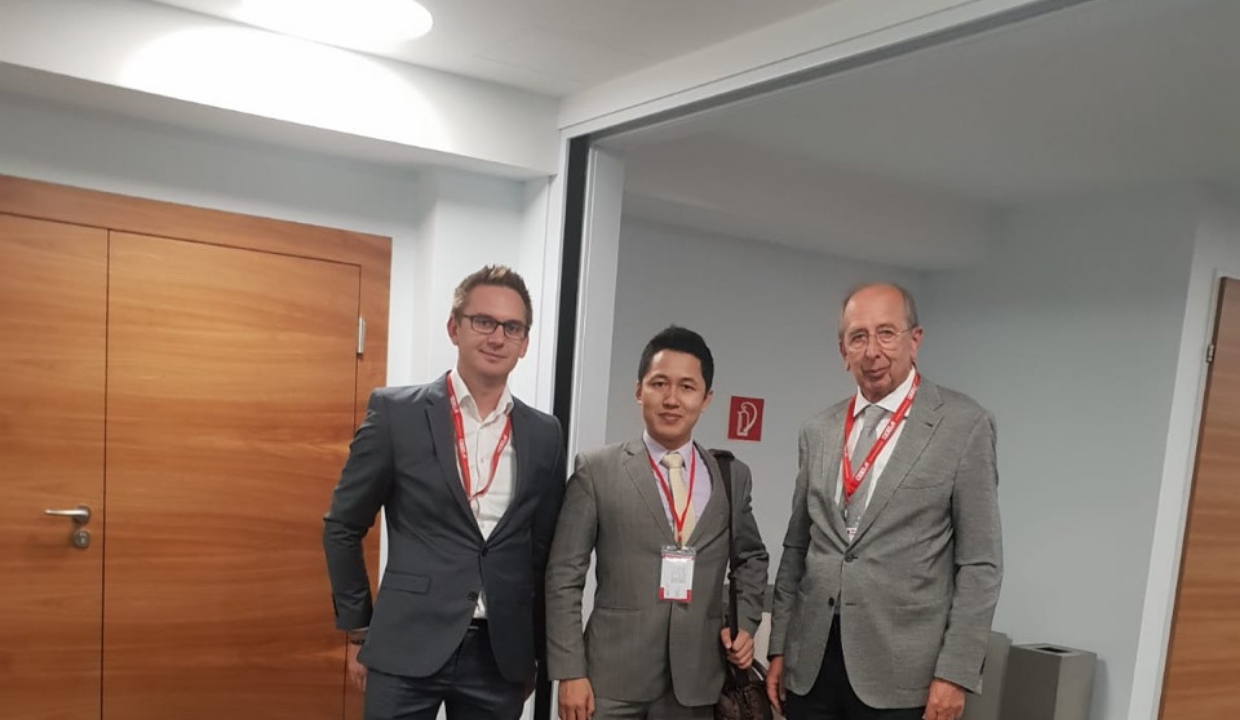
ANT Lawyers Joined with International Law Firms in Hong Kong on Dec 7th, 2018

In order to meet the legal demand arising from oversea investors, ANT Lawyers representative, Managing Partner Mr Tuan Nguyen has signed cooperation agreement with other international law firms in Hong Kong on Dec 7th, 2018 to provide legal support and service across numerous countries.

The lawyers are from Hong Kong SAR, the United Kingdom, Myanmar, Thailand, Vietnam, Malaysia, Taiwan, Macau, China (Beijing, Shanghai and Chengdu) have met up and discussed cooperation plan. The cooperation is expected create a platform for communication and cooperation to provide legal support and services to global enterprises, optimizing the business environment, promoting interconnection, investment and trade cooperation


At the formal event, the eleven representatives of the participated international law firm signed the Memorandum of Understanding, and promised to strengthen legal cooperation and exchanges in policy analysis, legal research, and legal services to provide comprehensive services for investors.

The cooperation signing ceremony was participated by the representatives of Government of Hong Kong Special Administrative Region (“HKSAR”) and the Standing Committee of the National People’s Congress, the governors, members and other professionals to witness this important moment. Ms. Tan Huizhu – Deputy Director of the Basic Law Committee of the HKSAR; GBM, GBS, JP and Standing Committee of the National People’s Congress – Mr. Tan Yaozong; GBM, GBS, JP and Vice Minister Vice Minister of Legal Department of Liaison Office of the Central People’s Government in the HKSAR – Mr. Liu Chunhua attended the ceremony as guest.

Thứ Ba, 18 tháng 12, 2018

Vietnam officially introduces national rice trademark

CAN THO – The Ministry of Agriculture and Rural Development today, December 18, has announced the logo of Vietnamese rice, marking the milestone of building a national rice trademark after many years of tapping the global market.


The organizer of the third Vietnam Rice Festival taking place in the Mekong Delta province of Long An from December 18 to 24 noted that the event was aimed at supporting Vietnamese rice producers and traders in boosting trade and investment, as well as ensuring sustainable development and cementing the position of Vietnamese rice in the global market.

This is the first time Vietnam has announced the national rice trademark since the country entered the global rice market in 1989.

To build the rice trademark, the ministry had earlier hosted a rice logo design contest.

Earlier, Le Thanh Tung, head of the southern representative office of the ministry’s Department of Crop Production, told The Saigon Times that Vietnam had completed procedures to seek international protection for its rice trademark.

Accordingly, to have the rice trademark protected, Vietnam filed an application with the Madrid System, a system for the registration of worldwide trademarks governed by the Madrid Agreement and the Protocol relating to the agreement. A single application with the system enables a trademark owner to obtain protection in all member nations.

Tung remarked that the ministry had also formulated regulations concerning the use of the Vietnamese rice trademark, requiring individuals and organizations to meet particular criteria to use the trademark.

In particular, Decision 1499/QD-BNN-CBTTNS 2018 stipulates individuals and organizations can use the certified trademark when granted business registration certificates or investment certificates that include rice production, processing and trading.

Individuals and organizations must be certified to satisfy food-safety requirements for rice processing, preservation and trading, or they must obtain one of the following certificates: good manufacturing practices, hazard analysis and critical control points, food safety management system ISO 22000, international food standards, global standards for food safety, food safety system FSSC 22000 or equivalents that are still valid.

Further, they must have rice products that are certified to meet Vietnamese standards, fulfill tax obligations and boost environmental protection activities.

Rice products that have been certified include white rice, jasmine white rice and glutinous white rice.

Regarding product quality, rice bearing the Vietnamese rice trademark must meet national quality standards, with white rice meeting TCVN 11888:2017 requirements, jasmine white rice meeting TCVN 11889:2017 requirements and glutinous white rice meeting TCVN 8368:2010 requirements. If there is a change to quality standards, rice products must comply with the updated standards.

Under the ministry’s Decision 1499, individuals and organizations have the right to use the rice trademark and their own brands for packaging, advertising and trading certified rice products. They can also exploit, use and enjoy other economic benefits from the trademark and participate in rice trademark promotion activities.

However, individuals and organizations are obliged to use the trademark only on certified rice products, to ensure product quality, to inform the trademark management unit if they no longer need to use the trademark and to pay any related fees.

-The SaigonTimes-